Sunday, October 26, 2014

Destiny

It was love at first sight for the harp and me, in a 14th century inn just outside of Cardiff, Wales, last July.  On my birthday, even.  We’ve been an item for two months, now, with no sign of the passion abating.  While we are locked in our embrace, my harp and I,  time evaporates and stops at the same time.   I am lost in the challenge of marrying what I already know about the piano to the particular demands of the harp.

My background in piano eases the learning curve.  Eye-hand co-ordination, suppleness in the hands, the ability to read notes and rhythm, and a well-developed practice and performance ethic, all developed over years of playing the piano,  allow me to short-circuit the process somewhat.  From a fast-tracked relationship after a casual meeting during holidays to a short engagement, it seems that my harp and I share a destiny.

Still, despite everything the harp and I have in common, a new relationship does take some adjustment.  Whereas, with the piano, each hand had limited access to the range of the other hand, on the harp, both hands have equal access to the instrument’s entire range.  I have already learned that key difference while arranging Christmas carols for the harp from my beginner piano books.  What’s designated as left hand and right hand for piano doesn’t necessarily apply to the harp.

Another difference is placement.  With the piano, I learned as an adult to prepare my hands over the keys to play chords.  That means, to form my hands in the correct position on top of the keys, and then to play all the notes in the chord simultaneously (often, four notes in each hand, at once).  That training helps with the harp, but placement is even more exacting for this instrument.  Not only do I have to place my hand on the string before playing one string, I have to know what’s coming, along with the correct fingering, so I can place the next series of notes as well, in each hand. 

Given the critical importance of placement to playing the harp, I have to look at my hands much more than I ever do on the piano.  In fact, I have spent fifty-five years of my life honing the skill of seldom looking at my hands when I play, and looking at the music!!  With the harp, I must instead watch my hands constantly to be sure that I am placing correctly, and to check my technique.  As a result, playing from memory is a necessity for the harp, I think, whereas memory is a convention and a tool for the piano.  I have to work at memory; it doesn’t come as naturally to me as it might if I had a better ear.  I know that these challenges will enhance my piano playing too.  After all, that’s what happens in a great relationship—your partner helps you grow.

It occurred to me one day that my experience with the harp is a wonderful analogy for handling personal and professional shifts in life.  No matter how new the experience with which we are confronted, whether we have chosen the experience or whether it is thrust upon us, we have a prior set of transferable skills we can use.  The idea is to identify the new skills required, and then figure out how our prior knowledge can help us to master them.  We do that one step at a time, one measure at a time, one practice session at a time.

Two months since our fateful first meeting, I spend as much time with my harp as I can.   The experience has convinced me that I have a skill set that enables me to learn new things—not despite my age, but because of it.


Saturday, October 25, 2014

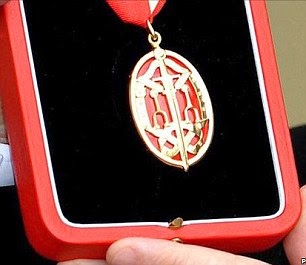
Knighthood

Which Canadian would you like to see receive a knighthood? asks a CBC poll:  Chris Hadfield?  Anne Murray?  Wayne Gretzky?  Other?  My qualified vote would go to Other.

Qualified, because I applaud the Canadians who, in 1919, asked the reigning monarch not to bestow titles or knighthoods on Canadians any more.   The NickleResolution, as it is known, declared “that the Canadian government would not approve an order or decoration that carries with it a title of honour or any implication of precedence or privilege. ”   The resolution was affirmed twice, by the governments of Lester Pearson in 1968, and Brian Mulroney in  1988.    When Conrad Black was knighted in 2001, he renounced his Canadian citizenship to accept the honour.

In my view, Knighthood (ladies become “Dames“ like Dame Maggie Smith of Downton Abbey) hearkens to a stratified and hierarchical medieval society marked by privilege and affluence on the one hand, and struggle and poverty on the other.   Generations of Canadians have toiled to erase the gap between rich and poor, to assure all Canadians enjoy a high quality of life.   We are a people who imagined  universal health care, credit unions,  and a Charter of Rights and Freedoms, a nation of diverse races living in peace in a vast land, a nation where citizens get together to repair the damage to a vandalized mosque, as they did in ColdLake this week.  We don’t need foreign titles disconnected from our own history to accelerate a slide into economic disparity.

Even more intriguing than the idea itself, however, is the list of candidates the CBC poll proposes.  Hadfield, Murray, and Gretzky are worthy candidates; they have distinguished themselves in their respective fields.  They represent people who have reached the pinnacle of their professions in a very public way—astronauts, musicians, athletes, actors, politicians, in the main.  In recognition of their gifts and accomplishments, society already remunerates its stars with celebrity and money.   And celebrity and money beget more celebrity and more money.  Witness the gift bag valued at $80 000 that Oscar nominees took home in 2014.   Titles are superfluous, it seems to me,  for people on whom society has already showered so much.

No, the Other category would get my vote in this poll, pretending for a moment that peerage would be a good idea.  The honour should go to the hundreds of thousands of extraordinary and accomplished Canadians who make a difference every day in the lives of the people around them,  without any recognition.  So, among many deserving individuals in the “other“ category:

·  Corporal Nathan Cirillo,  standing guard at the cenotaph in Ottawa on Wednesday, and Warrant Officer Patrice Vincent, wearing his soldier's uniform in the parking lot of St-Jean-de-Richelieu on Monday; all who served in Afghanistan, and all military who put their lives on the line daily in combat abroad or search-and-rescue missions at home;
·  Kevin Vickers, the Sergeant at Arms of the Canadian Parliament;
·  police officers;
·  the individuals who suited up in protective gear and waded into the natural gas fire in Prudhomme  behind heat shields and a wall of water;
·  the health care workers fighting ebola;
·  the surgeon who reset and pinned my colleague’s jaw after an errant puck smashed it during a game he was officiating;
·  teachers who share themselves and their knowledge with young people every day, stay after school for hours to supervise athletics or the arts, and then accompany the same students on weekend road trips for games or tours;
·  caregivers of elderly or physically or mentally challenged family members at home;
·  the mayor of my city, who attends almost all the functions  leaving encouragement and grace in his wake;
·  anyone who serves in elected office;
·  people preparing fall suppers in small communities all over the province and the country;
·  private music teachers who open a new world to children, along with their family rooms and their basements;
·  the ladies at the Co-op store distributing shoeboxes on behalf of Samaritan’s Purse to be delivered to children at Christmas;
·  the engineers who keep the power flowing when the temperature falls to forty below zero;
·  those who prepare Meals on Wheels, and deliver them;
·  individuals who enshrine participatory democracy in the phone calls they make to their elected officials, and the letters they send them.

Instead of showering more honours on people who have already been recognized, I vote to single out “ordinary“ Canadians who mortar together accomplishments into an awe-inspiring body of work likely to be recognized only by the fortunate group whose lives they impact daily.


Monday, October 13, 2014

Thanksgiving

If the only prayer you ever say in your life is ‘Thank you,’  Meister Eckhart wrote, that will suffice.  However delinquent I may be in many areas,  I have managed to remain grateful every day.  Every single day.  This being Thanksgiving Day, however, it’s important to formalize my gratitude, to carve it into the puzzle box of treasured pieces that comprise my life.

How is it possible that one person can enjoy so many blessings? One might even argue, a disproportionate number of blessings.

·    a steadfast husband whose preoccupation is the welfare of the family, who devotes the better part of his days to monitoring our financial status, dreaming up and executing projects for yard and house, who, like RFK, asks, ‘Why not?’

·    children who care about each other and the world, with the courage to make themselves vulnerable to see what they might accomplish, as well as the equanimity to handle the challenges life brings;

·     our children’s partners who love our children unconditionally and  embrace our family’s idiosyncracies;

·    our almost three-week old grandson, whole and alert, blue-grey eyes fixed on mine as I play 
    « bébite » with him as my father did with his grandchildren,  and tell him he’s perfect, will always be perfect;

·    solid roots having grown into an extended family (sister, sisters-in-law and brothers-in-law, nephews, nieces) who connect me to my beginnings and my core;

·    enlightened parents who, convinced already in that era that children absorb all stimuli from day one, exemplified adult literacy:  conversation, books,  word puzzles and word games, and added to that the opportunity for a third language, music;

·     a career as an educator that has spanned more than thirty years, whose demands and challenges have moulded me and have allowed me to stretch, to explore facets of my self I didn’t know existed;

·     caring and competent colleagues whose dedication to children inspires daily;

·    a home;

·    a home in a corner of the world that most people can’t drive through fast enough, obvlious to the treasures it camouflages and reserves for the discriminating eye—good, salt of the earth people, security, clean air and water, space, quiet, peace;

·    neighbors who have shared a life, watched our children grow, rejoiced in their accomplishments, mourned our losses, supported us in our times of stress, and continue their integral role in our lives;

·    food, so that I have never known hunger;

·    music to challenge my mind, my soul, and my resilience, in which I have found comfort and satisfaction unimaginable in my youth;

·    time to live to see my child’s child;

·    opportunity to study, read, travel, fulfill different roles in different institutions, all the while appropriating for myself the best of the people with whom I have been fortunate to interact in those contexts;

·    my harp, my most recent self-imposed challenge, providing new learning, a shift in paradigm, satisfaction, and, most important, something that belongs only to me to be woven into my identity.


You bet, I’m grateful.  Every day.  Not just at Thanksgiving.

Friday, October 3, 2014

Mémère

I didn’t think of myself as Mémère until our son used the word in the dedication to the bright yellow duck book, Allons à la ferme, that we found leaning against the front door last January announcing our first grandchild, born almost two weeks ago. 

My mother didn’t like the word.  When I proposed that our children call her Mémère, she protested.  “It sounds like an old woman,” she said.  She was sixty-three at the time, old enough to be a grandmother, for sure, but not ‘old’ in the classic sense.  Her response surprised me.  For me, Mémère evoked tradition, kindness, warmth.  What would the children then call my mother?  Grand-mère?  So formal.  I had always called my grandmothers Mémère, so I had no frame of reference for anything else.  Grand-mère would be so unnatural. 

We saw my paternal Mémère every week, at least, usually after piano lessons.  Papa would pick up my sister and me, and head straight for his parents’ house to visit.  Often, we would find Mémère in the yard, watering can in hand, tending the gladioli and tulips that masked the drabness of the gray clapboard.  Legs swollen into hard posts could slow her down, but they could never stop this indomitable woman who had moved West alone with four children in tow.  In fact, I still see myself  propped up at the kitchen table on a red-lidded, metal flour canister, savouring a bowl of homemade beans, dark and rich with molasses and bacon.   White hair waved around her ears and pinned back in a bun, Mémère was a force.

So was my maternal Mémère.  I was fortunate to see her once a year;  a five hundred mile journey was a big deal then.   Before Alzheimer’s dissolved her memory, she lived alone upstairs in a war-time house on Ritchot Street.    Accessible only by a steep twenty-step staircase,  the quaint apartment was always fragrant with the warm comfort of her legendary cloverleaf rolls.  The challenging entry worried her children, though, as she would take off on foot to visit friends or do errands.   Not a problem.  Si je tombe, quelqu’un va me ramasser, she reasoned, and carried on.   Philosophical to the core, she figured that if she fell, someone would pick her up.  Unmatched as a cook and seamstress, she remembered my birthday with a box of homemade cookies that survived the mail.   Once again, spunk + great food = Mémère.

Given my extraordinary experience of strong, determined grandmothers, I wanted my children to grow up with a Mémère, too.  After I shared these memories with my own mother and explained to her my connotation of Mémère, she relented.  Our children adored her, and I think she developed a fondness for the name.  The unconditional love with which she blessed them still caresses them in their adulthood.  In her arms, they found comfort, safety, and acceptance.  She quilted each one a quilt comforter, always had bill-lined cards for them to celebrate their accomplishments, crafted unique dresses and robes, and slipped them chocolate bars when I wasn’t looking.  Her pride in them shone through her eyes.  I recognize the power of those memories in our son’s choice of the word for his son.


Now, it’s my turn.  I get to be a Mémère.  My responsibility is to pass on to my grandson two generations of Mémère-ness, and my gift is the opportunity put my own stamp on the role. 

Saturday, September 27, 2014

Voices

A little voice told me the podcasts were not a good idea.  Did I listen?  Of course not.  I went ahead and tuned in to “Medical Errors,” the week’s episode on White Coat, Black Art with Dr. Brian Goldman.    Even when I learned that the medical mistakes involved birth tragedies, and the voice became more insistent, I couldn’t bring myself to press pause, never mind delete.  The story obsessed me.  How could it not?  Three miscarriages, a stillbirth by Caesarian; after a fifth pregnancy, a child, a few days old, brain-damaged from oxygen deprivation when the womb explodes, dead when life-support is withdrawn.  Against all odds, a sixth conception, and, this time,  a baby with a serious heart defect and a fused windpipe and esophagus.  How can anyone survive such pain, I wonder.

I don’t think of these podcasts at all when my phone pings at 6 :30 a.m.  The text from our son reads: Water broke; going to the hospital.  A week early.  Disappointment tempers the excitement; I can’t be with them for a few days yet, as I have committed to sessions with teachers over the next two days. Sound bytes from the podcast do pierce my filter later in the evening, however, with the next update.  Progress is slow.

My own labour with this child’s father competes with Dr. Goldman’s program for byte space.  I relive flashes.  Sitting in my rocker at home as  the contractions begin and then intensify.  The decision to go to the hospital.  Heartbreak after hours of labour, and I am dilated only two centimetres.  Really?  Doing the proportional, if illogical, math, and wondering how I can make it through another ten hours or so to get to ten centimetres, and then summon the strength for the real work of delivery.  The death-grip on my husband’s arm when he announces he will grab a bite to eat for a few minutes.  The conviction that this child will never be born, and I will be caught forever in the contraction loop.  The relief that accompanies signing the forms for the C-section.

I live the roller coaster with my son and daughter-in-law.  Labour by distance.  I warn the teachers with whom I am working of the reasons for any distraction they might notice, or any compulsive phone-checking.  I struggle to concentrate on the work at hand, and I try to dimiss premonitions that something might be wrong.

Erik arrives just as the session ends.  I make the announcement—the teachers deserve to know, having shared the journey with me.  Everyone claps.  A photo accompanies my son’s text.  Erik is perfect, and his mother is doing well.  I can breathe again.  Nothing else matters.  The news has squashed the negative voices like bugs on a fall patio.  Now, we can focus on getting home, repacking, and heading out very early the next day on the ten-hour trip to meet our grandson.

His son in the crook of his arm, our son looks like he’s been a father for a lot longer than 48 hours.  He places Erik in my arms.  The baby snuggles into my shoulder.  My cheek delights in the velvet of his skin.   Enveloped in bliss and gratitude, I imbibe his warmth.  I memorize the curve of his tiny ears, the pucker of his mouth, the long, fine musician’s fingers. 


Time stands still, and so do the haunting voices.    The only voices that matter today are the ones that call me Mémère.

Sunday, September 14, 2014

Derailment

The phone rings in the middle of my harp practice.  I have just finished my lesson on Skype, and I intend to invest a little more time to integrate my teacher’s suggestions before I forget what she recommended.  The cryptic notes I scribble during the lesson do help to anchor me, but there’s nothing like immediate reinforcement.

“I’m at Phil’s,*” Elmer says.  “I just happened to mention that you have a harp, and he wants to see it.  And maybe hear a tune or two?” 

“Sure, but it’s Frère Jacques, an anonymous waltz, and a few Christmas carols . . .”

“That’ll be great.  We’ll be over in a few minutes.  And then, how about going out for lunch?”

Buoyed by the vote of confidence, and excited about the anticipated lunch, I launch my switch from private mode (spending the day at home with work projects and music) to people mode (chatting with friends) with make-up and a quick change of clothes.  Less project work and more visiting today, it seems.  Works for me.

My plan for the day has been dereailed, albeit in the best way possible.   “Interruptions [are] my work,”  Henri Nouwen said, and I need to remind myself of the inherent truth of the statement.  Always more important than projects,  relationships, along with the dialogue that accompanies them, stimulate and revive me, and spark my work like embers do kindling.  “Recital,”  lunch, and a wee dram of Scotch with more conversation later, we are richer for the spontaneous get-together.  In this case, derailment is easy to manage—just resechedule and reorganize.

But what about critical derailment that blindsides and irrevocably alters the path of life, in the short or long term? 

On a play the referees attempt to whistle down with one blow that’s no match for the crowd noise in Winnipeg, Rider quarterback Darian Durant gets tackled and tears a tendon in his elbow.  Season over for him.  In a nanosecond.  On a play that didn’t count.  Dismay on the team.  The season will be different, now, for him, for his teammates, and for Tino Sunseri, who gets a chance to lead, to showcase his abilities.

In the media conference the Tuesday after the game, the press prods Rider coach Chamblin to dwell on the negative, to blame the refs.  Chamblin is having none of it.  If Durant is out for the season, if that’s “what we’re dealt, we’ll play the cards from there; . . . the game is history; .. . time to move forward; . . . we don’t work out of fear.”  Yes, the team experienced a derailment.   They mourned after the game.  Now, they must perservere.

Football, though, is only football, however sacreligious that can sound to people who bleed green.  It’s a less consequential context than the critical life events that can blindside us.  I think of accidental death or a diagnosis of terminal illness as the ultimate derailments.  One moment, life stretches ahead, an untraveled road paved with possibility and lined with landmarks past and future.  The next, an electromagnetic wall blocks the path,  the way ahead beckoning in tantalizing clarity, yet unattainable.  In the face of tragic reversals of fortune, individuals consolidate their courage.  Victims of tragedy grieve their loved ones for the rest of their lives, yet they put one foot in front of the other day in and day out.    The dying decide not only to be positive, but cheerful.  They want to use the time they have left to make a difference for those they know and love, and refuse to be embittered or resentful.  They inspire the rest of us to manage our own derailments.

Derailments test our mettle.   How will we manage life events that take us away from our plans?  If, in the inconsequential redirections that mark our days, we steer a stable course and find the potential for growth, we can layer coat after coat of resilience and calm in the same way we might oil or varnish wood.  We can attempt some preparation for the portentous derailments life is sure to bring.   To inspire us along the way, we have the wisdom and strength of people who have it figured out.


*not real name

Wednesday, September 3, 2014

Disservice

It’s not raining.  I’m surprised as I step out on the porch this morning on the way to work.  Maybe I won’t need the  Rider green raincoat I purchased at Otter Lake last year and that kept me toasty and dry in Galway.  Yes, the pavement is damp; it has rained.  The prognostications of the weather forecasters have been fulfilled elsewhere or not at all, so far, it seems.  What a great Wednesday ahead.

But Wednesday is not important in and of itself, Ted Deller informs me during the CBC Radio Morning Edition as I drive to work.  It’s “hump day.”  Really?  That’s all Wednesday is good for?  One day closer to Friday? 

Wednesday is so much more.

Wednesday is :
·  a brain-wringing, creative opportunity to plan a dynamic and practical session for teachers;
·  stimulating pedagogical conversations with colleagues;
·  a thank-you note from my daughter-in-law for the baby shower gift, a reminder that she cherishes the tradition of the hand-written letter;
·  an email from a music minister offering to take one of the weekend liturgies this week, freeing me to handle only one rather than two, and then to free me up next Sunday, too, so I can attend an event with my husband;
·  an hour with our son on Skype, finding out about his new digs;
·  an hour with my harp relaxing brain cells that the creative process has strained;
·  the tang of paint when I get home after work; on this humid day, my husband has painted the downstairs bathroom, still in renovation;
·  a few stolen minutes to stretch and work my muscles still stiff after a day of sitting and calculated movement.

Tomorrow will be Thursday, another day of new delights and challenges, exceptional and joyous in itself, and certainly not because it brings me closer to Friday and TGIF.  

Media denizens, language that expresses dismay over Monday, relief on hump Wednesday and joy on Friday conveys a negative message—that the best part of our life is the weekend.  That somehow we stumble through the rest of the week in a blur, tolerating each day only because it brings us closer to respite on the weekend.  Even more serious, the negativity is mired in an obsolete worldview that defines weekend as Saturday and Sunday.  How many of us work within the traditional workweek? How many more work on Saturday and Sunday, with days off scattered through the rest of week?  How many work every day, without the benefit of days off?  So, please, use the power of the airwaves to help us focus on the moment, to rejoice that tomorrow is Thursday, for its own sake.  Help us to focus on the reality of the 21st century rather than cling to a faded and jaded model.

No wasting five-sevenths of my life for me.   I want to savour every moment of every day with which I am gifted, with its joys and challenges and aches and delights


“Hump day” taints a perfectly good Wednesday.  What a shame! No more.  Please.